
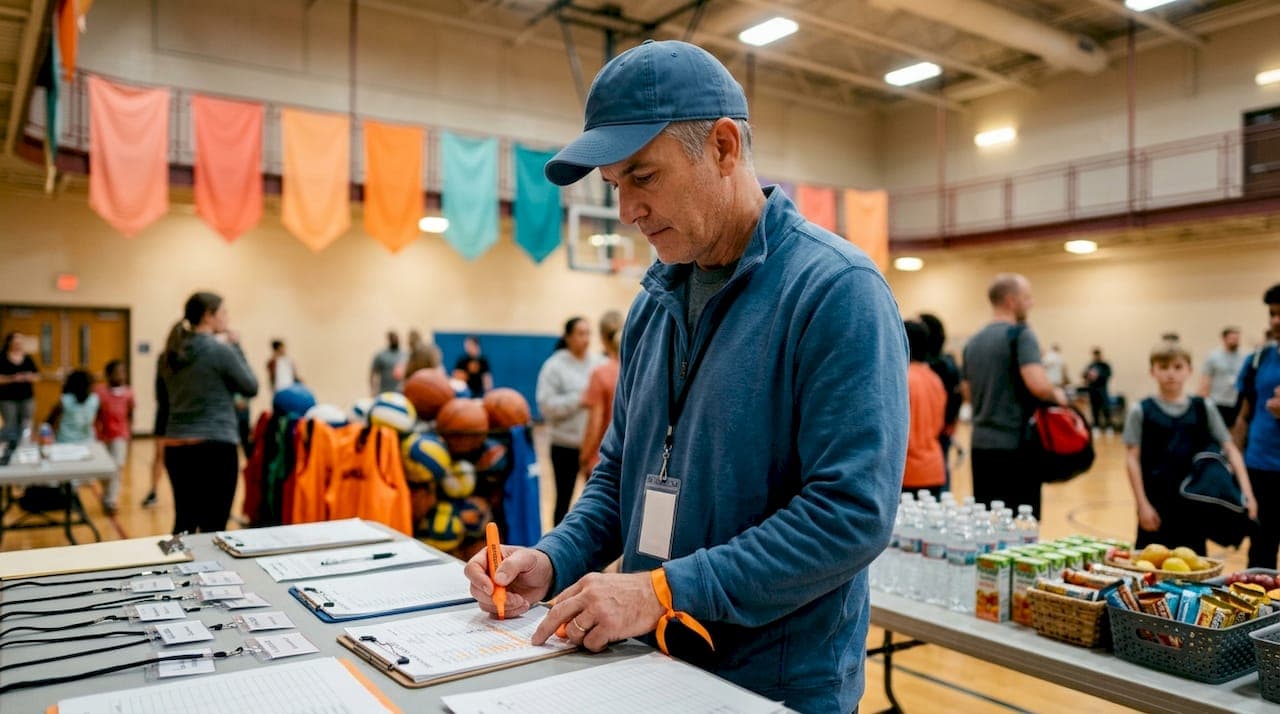
Volunteer management in sports events is defined as the coordinated process of recruiting, scheduling, training, communicating with, and retaining volunteers to keep events running on time and on budget. Done well, it turns a chaotic race day or tournament weekend into a smooth operation. Done poorly, it produces no-shows, confused staff, and frustrated athletes. The sports event volunteer management tips in this article are built on proven coordination strategies, including automated reminder systems, buffer staffing, tiered leadership, and structured shift overlaps, that give organizers real control from signup through teardown.
1. What are the best sports event volunteer management tips for recruitment?
Recruitment is where most volunteer programs either win or lose before the event starts. The single most important rule: recruit 20–25% more volunteers than your minimum headcount. That buffer absorbs last-minute cancellations without leaving gaps in coverage.
Target your recruiting through networks that already trust you. Schools, sports clubs, corporate social responsibility programs, and returning volunteers from past events are your highest-conversion sources. Returning volunteers already know your culture and require less onboarding time.
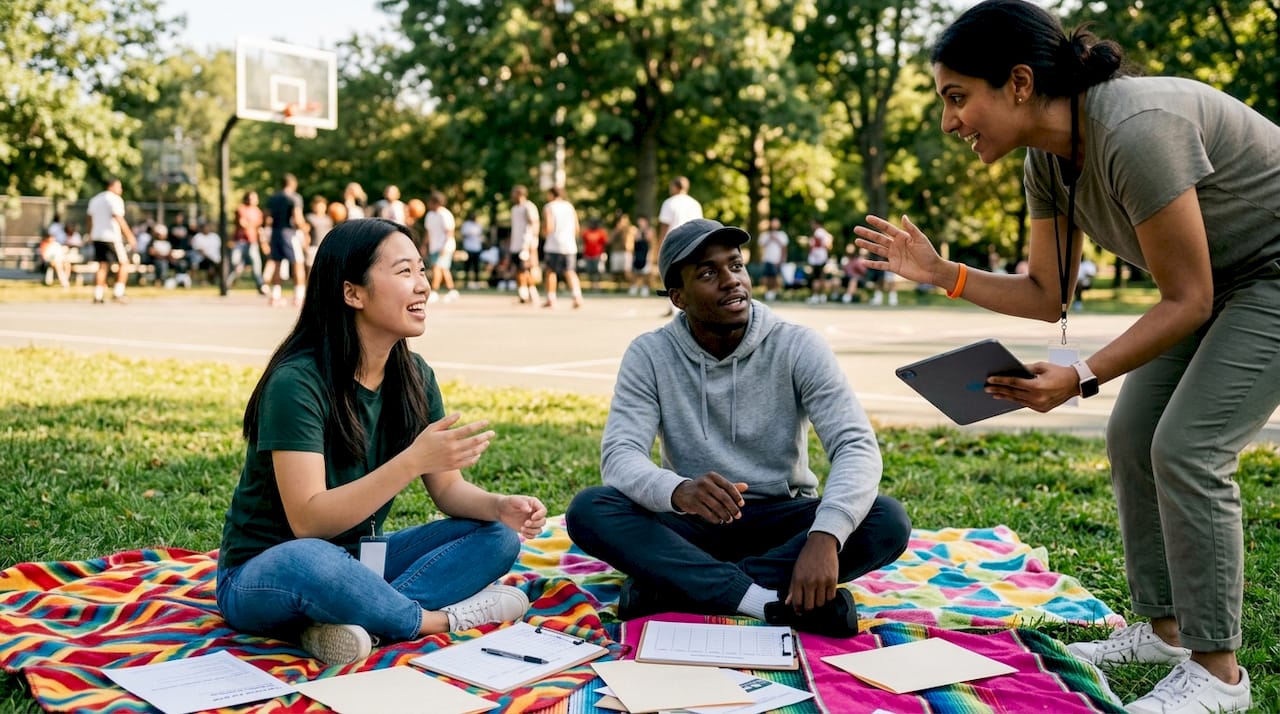
Treating volunteers as strategic assets with clear job descriptions that highlight real benefits, such as community impact, free event access, or skill development, increases sign-up rates by over 80%. Generic "we need help" posts underperform every time. Specific, benefit-forward listings attract committed people.
Pro Tip: Create a short one-page volunteer brief for each role. Include the exact time commitment, the physical demands, and one sentence on why the role matters to the event. Specificity converts browsers into signups.
2. Build a scheduling structure that prevents gaps
Scheduling is not just filling time slots. It is building a system that holds up when three people cancel on event morning. Target 3–5 volunteers per youth sports team or 5–8 per active field for tournaments, depending on the complexity of each station.
Design shifts in 3–4 hour blocks. Shorter shifts reduce burnout and make it easier for volunteers with part-time availability to commit. Longer shifts create fatigue and increase the chance of early departures.
Schedule 15-minute overlapping shifts between outgoing and incoming volunteers. That overlap gives the outgoing team time to brief the incoming group on anything that changed during the shift. Without it, critical information falls through the cracks.
For multi-day events, treat each day as a separate staffing challenge. Multi-day scheduling works best with independent signup sheets per day, because volunteers have different availability on saturday versus sunday. Combining days into one sheet creates confusion and double-booking.
Pro Tip: Use preference matching when assigning roles. Ask volunteers during signup whether they prefer physical tasks, crowd-facing roles, or behind-the-scenes work. Matched assignments reduce mid-event dropouts.
3. How automated communication cuts no-shows dramatically
No-shows are the single biggest operational threat in volunteer coordination. The fix is a structured, automated reminder sequence, not a single email sent the night before.
A 3-touch automated reminder system works as follows: send an immediate confirmation when a volunteer signs up, follow with a 48-hour reminder before the event, and send a 2-hour SMS notification on event day. This sequence reduces no-show rates from 20–30% down to 5–10%. That is a dramatic shift in reliability for any event.
Automation also cuts coordination time by up to 65%. That time savings lets organizers focus on day-of problem-solving instead of chasing confirmations by phone. For episodic, event-based volunteers who may only serve once or twice a year, automated touchpoints keep the commitment top of mind without requiring manual follow-up.
Post-shift automated follow-up messages serve a second purpose. They re-engage volunteers who missed their shift and open the door to recovering their participation for future events. A simple "We missed you, here's how to join us next time" message costs nothing and recovers relationships that would otherwise go cold.
Pro Tip: Add a one-click confirmation link to your 48-hour reminder. Volunteers who click confirm are far less likely to no-show than those who only receive passive reminders.
4. What role clarity and on-site management look like in practice
Vague roles create vague performance. Every volunteer position needs a written job description that names the specific responsibilities, the physical requirements, and the exact time commitment including setup and teardown.
On-site orientation lasting about 30 minutes before each shift starts is the standard for well-run events. Use that time to walk volunteers through their station, introduce them to their zone coordinator, and review emergency protocols. Volunteers who know what to do in an emergency perform better in normal conditions too.
Check-in and check-out systems let organizers confirm coverage in real time and reassign volunteers quickly when tasks change. Without a check-in system, you cannot know who is actually on site versus who simply confirmed and did not show. Tracking arrival, shift adherence, and departure is not bureaucracy. It is operational visibility.
Plan volunteer shifts to extend beyond the event's official end time. Including cleanup time in shift schedules prevents the common problem of volunteers leaving the moment competition ends, which leaves organizers alone with teardown. Build 30–45 minutes of post-event time into every shift that involves setup or field-side duties.
5. Use a tiered leadership structure to reduce your burden
Centralized volunteer management breaks down at scale. One coordinator cannot effectively manage 50 volunteers across 8 stations at a tournament. A tiered leadership model solves this.
Appointing zone coordinators who manage specific areas, such as scoring, concessions, parking, or registration, reduces the head organizer's direct span of control. Each zone coordinator handles local decisions, manages their team's check-ins, and escalates only genuine problems. This structure improves response time and volunteer satisfaction simultaneously.
Zone coordinators also serve as a talent pipeline. Volunteers who perform well in a zone lead role are your best candidates for larger coordination responsibilities at future events. Promoting from within builds loyalty and reduces training costs over time.
Scaling volunteer management works best when local leaders have earned real autonomy, not just a title. Give zone coordinators the authority to make shift adjustments without approval from the central organizer. Autonomy with accountability is the operating model that keeps large events running smoothly.
6. How to retain volunteers and build a program that grows year over year
Retention is the metric that separates well-managed volunteer programs from ones that start from scratch every season. Volunteer retention rates below 60% signal operational failures. Well-managed programs achieve 70–80% return rates year over year, with 83% considered excellent.
Recognition drives retention more than any other single factor. Public acknowledgment, a personal thank-you from the event director, and small perks like event merchandise or early access to future events cost little and create strong loyalty. Volunteers who feel seen come back.
Gather post-event feedback from every volunteer. A short three-question survey sent within 24 hours of the event captures honest impressions before memory fades. Use that feedback to fix friction points before the next event. Volunteers who see their feedback acted on are far more likely to return.
Volunteers perform better and return more often when they understand the impact of their role, not just the task list. Tell your parking team that their work keeps families safe and on schedule. Tell your registration volunteers that their accuracy directly affects athlete check-in times. Meaning converts a one-time helper into a returning contributor.
Pro Tip: Create a volunteer alumni list and reach out to past volunteers first when recruiting for new events. A warm re-engagement message to someone who already had a positive experience converts at a much higher rate than cold outreach.
"The best volunteer programs treat every person as a community member with something valuable to contribute, not as a body filling a slot."
Key Takeaways
Effective sports event volunteer management combines buffer staffing, automated communication, clear role definitions, and consistent recognition to produce reliable, repeatable results.
| Point | Details |
|---|---|
| Buffer your headcount | Recruit 20–25% more volunteers than your minimum to absorb last-minute cancellations. |
| Automate your reminders | A 3-touch reminder sequence cuts no-show rates from 20–30% down to 5–10%. |
| Overlap your shifts | Schedule 15-minute overlaps between shifts so outgoing volunteers can brief incoming teams. |
| Build a tiered structure | Zone coordinators reduce organizer burden and improve local response time at large events. |
| Prioritize retention | Aim for 70–80% volunteer return rates by combining recognition, feedback, and meaningful role framing. |
What I've learned about volunteer management the hard way
Running sports events taught me one thing faster than anything else: the volunteers who show up reliably are the ones who felt respected before the event started. Not just informed. Respected.
Most organizers send a confirmation email and call it communication. The ones who run smooth events send a confirmation, a personal welcome, a role-specific briefing, and a reminder that lands two hours before the shift. That sequence is not overkill. It is the difference between 80% show rates and 95% show rates.
The tiered leadership model changed how I think about scale. I used to believe that staying close to every detail was the mark of a good organizer. It is actually the mark of a bottleneck. The moment I gave zone coordinators real authority, the event got better. Problems got solved faster. Volunteers felt more engaged because they had a local leader who knew their names.
Technology is not a replacement for good planning. It is a multiplier of it. If your scheduling is chaotic, automation will just send chaotic reminders faster. Get the structure right first, then let tools like Athloapp handle the repetitive coordination work. That combination is what actually scales.
— Abdulazeez
How Athloapp supports sports event organizers
Sports event organizers who manage volunteers across multiple stations, days, and roles need a central hub, not a stack of spreadsheets and group texts.

Athloapp brings volunteer coordination, event ticketing, scheduling, and communication into one platform built specifically for youth and high school sports. Organizers can manage event signups and reminders without switching between tools, track attendance in real time, and give zone coordinators the access they need to manage their teams independently. Whether you are running a single-day tournament or a multi-day regional championship, Athloapp gives you the operational visibility to keep every station covered and every volunteer informed.
FAQ
How many volunteers do I need per field at a sports tournament?
Target 5–8 volunteers per active field for tournaments and 3–5 per youth sports team. Recruit 20–25% above your minimum to cover last-minute cancellations.
What is the best way to reduce volunteer no-shows?
A 3-touch automated reminder sequence, immediate confirmation, a 48-hour reminder, and a 2-hour SMS on event day, reduces no-show rates from 20–30% down to 5–10%.
How long should volunteer shifts be at a sports event?
Shifts of 3–4 hours with 15-minute overlaps between outgoing and incoming volunteers work best. Shorter shifts reduce burnout and make it easier for part-time volunteers to commit.
What volunteer retention rate should I aim for?
Aim for 70–80% return rates year over year. Rates below 60% indicate operational problems. An 83% retention rate is considered excellent for volunteer programs.
How do I keep volunteers engaged during a multi-day event?
Treat each day as a separate staffing challenge with independent signup sheets. Recognize volunteers publicly, gather feedback after each day, and give zone coordinators authority to make local decisions without waiting for central approval.