
The best fix for youth sports payments is a purpose-built sports app with QR-ticketed, escrowed transactions, backed up by peer-to-peer apps for small one-off items. Expect a small transaction fee on each charge, usually worth it since you'll stop chasing envelopes and spreadsheets. Some apps combine these features into one, so it's worth a look before you settle on a patchwork of separate tools.
TL;DR:
- Using a purpose-built sports app with QR ticketing and escrowed payments reduces manual tracking and offers a small transaction fee worth the convenience.
- Setting up and testing payment profiles, creating QR links early, and clearly communicating instructions are essential for smooth cashless youth event operations.
- Bundling payments seasonally or monthly, rather than per event, significantly decreases processing fees, especially for small transactions.
- Reconciliation should occur immediately after the event using offline backups, with clear refund policies and trained volunteers to handle disputes swiftly.
- Implementing safety measures like sibling discounts, installment options, and small cash backups ensures fairness and inclusivity for families unable to pay digitally.
Table of Contents
- Your Pre-Event Cashless Payments Checklist
- Which Payment Method Fits Your Event?
- What Do Transaction Fees Actually Cost You?
- How Do You Reconcile Payments After the Event?
- How Do You Keep Cashless Fair for Every Family?
- How Does QR Ticketing Simplify Gate Entry?
- What Security Basics Should You Not Skip?
- How Do You Roll Out Cashless Payments Without Chaos?
- What I'd Tell Any First-Time Organizer
- Get Your Next Event Off Cash With Athlo
- Sources
- FAQ
Your Pre-Event Cashless Payments Checklist
Getting a small event off cash entirely takes less setup than most first-time organizers expect. You don't need a treasurer's degree, just a working plan before the first ticket goes out.
- Open and test a payment profile. Set up your account in whatever app or processor you're using and run a $1 test charge to confirm money actually lands where it should.
- Build your QR ticket or payment link. Create it early, then scan it yourself on a phone to catch broken links before parents do.
- Set your price structure. Decide on flat fees, bundled rates, or sibling discounts now, not the morning of the event.
- Assign gate and reconciliation roles. One volunteer scans, one handles cash exceptions, one tallies at the end.
- Send instructions early. A short text or email a week out beats a scramble at the gate.
Nail these five steps and your first cashless event runs like your tenth.
Which Payment Method Fits Your Event?
Not every youth event needs the same setup. A weekend 3v3 tournament and a full travel-team season have very different money problems, so the right tool depends on volume, ticket price, and how much bookkeeping you're willing to do by hand.
- In-app QR ticketing with escrow works best for anything with a gate: tournaments, camps, coaching sessions, or ticketed high school games. Payment ties directly to attendance, waivers, and refunds live in one record, so there's no separate spreadsheet to keep updated.
- P2P apps like Venmo or Zelle are fine for a quick $5 collection among ten families, but they leave a messy trail once you're past a handful of transactions. There's no automatic tie to rosters or attendance, and reconciling who actually paid means scrolling through a transaction history by hand.
- Card readers or tap-to-pay make sense at concession stands or merchandise tables where someone is standing at a table taking one payment at a time.
- A hybrid model covers real-world gaps: recurring dues move to a digital platform while game-day cash stays available for the one parent who forgot to pay ahead. A hybrid approach that keeps both cash and digital options open tends to serve community clubs better than an all-or-nothing switch.
Match the tool to the transaction, not the other way around.
What Do Transaction Fees Actually Cost You?
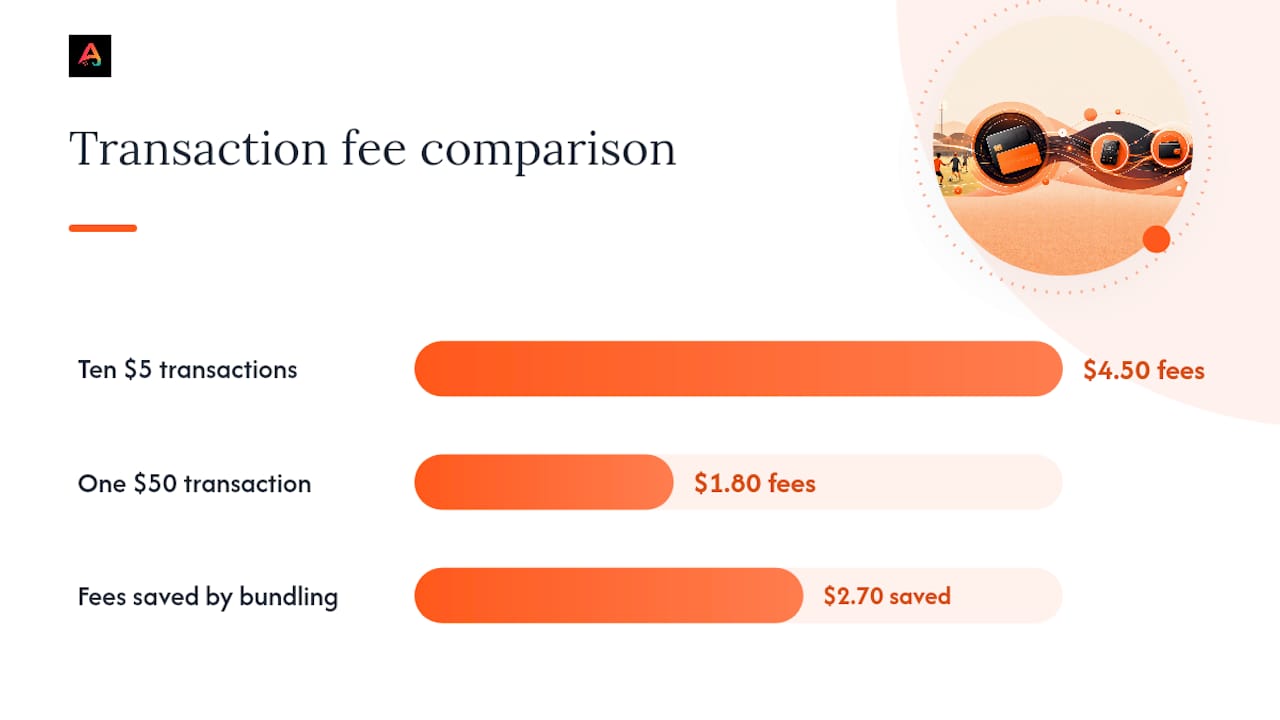
Most processors charge a percentage plus a small flat fee per transaction, often somewhere around 3% plus 30 cents. On a $5 admission charge, that flat fee alone eats a meaningful chunk of the payment, which is why volume matters more than most organizers realize.
The fix is bundling. Charging once per season or per month instead of once per game turns ten small transactions into one, cutting the fixed-fee hit dramatically. Moving subs and match fees onto a digital platform also automates reminders, so you're not the one texting late payers every week. Where it's available, ACH or direct debit for recurring dues shaves further off card-processing costs.
Run the math before you commit: multiply your average transaction size by your expected volume, then compare a per-event fee structure against a bundled monthly charge. The gap usually surprises people.
How Do You Reconcile Payments After the Event?
Money problems in youth sports rarely come from theft. They come from nobody writing anything down.
- Scan at the gate, log offline as backup. If your scanner or connection drops, keep a pre-printed roster on a clipboard so entry doesn't stall.
- Reconcile the same day. Compare your ticket count against your payment total before memories fade and receipts get lost in a jacket pocket.
- Publish a clear refund policy before the season starts. State the timeline and method in writing, then follow it exactly, no exceptions made on the spot.
- Train volunteers on the basics. Anyone touching money should know how to process a refund, spot a duplicate charge, and escalate a dispute calmly.
Pro Tip: Keep one volunteer whose only job on event day is handling payment problems. A dedicated "money person" who isn't also trying to check IDs and manage the line will resolve disputes faster and with a lot less stress on everyone waiting behind them.
Clubs using structured payment platforms consistently report fewer missed fees and clearer records than those running payments through a mix of cash boxes and text messages.
How Do You Keep Cashless Fair for Every Family?
A cashless system that quietly locks out families who are tight on cash isn't actually working. Build the safety valves in from day one instead of scrambling when a parent calls embarrassed about a late payment.
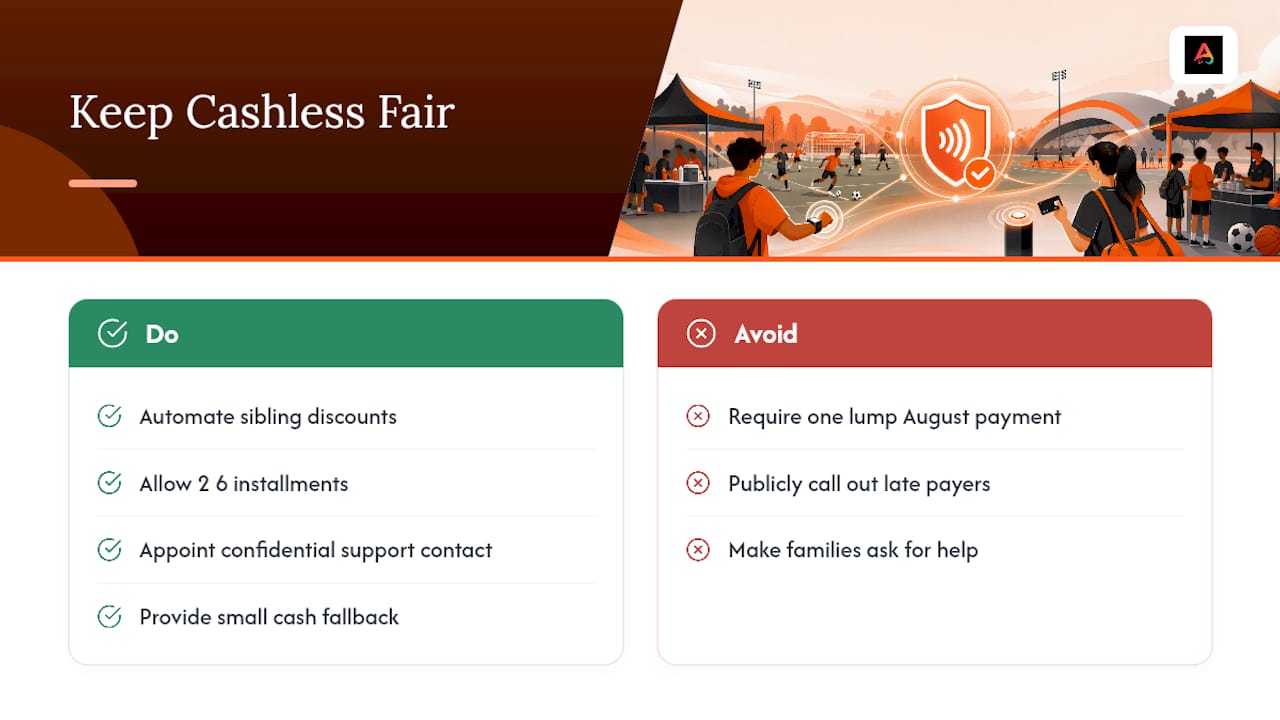
Offer sibling discounts automatically rather than making a family ask for them. Let dues split into two or three installments instead of one lump payment due in August. Set up one trusted, confidential contact, a coach or team parent, who can quietly arrange a reduced rate or waiver without the whole team knowing. And keep a small cash fallback available at the gate for the rare family without a card or smartphone. None of this undoes the benefits of going digital. It just keeps the system human.
How Does QR Ticketing Simplify Gate Entry?
Long entry lines are usually a scanning problem, not a crowd problem. QR tickets solve it by letting one volunteer with a phone process an entry in under two seconds instead of counting cash and making change.
Escrowed in-app payments add the piece most DIY setups miss: your payment record, your roster, and your waivers all live in the same place, so a refund or a missing medical form doesn't require digging through three different apps. Some apps build ticketing and payments this way for youth and high school events.
A few field-tested habits make the difference on event day:
- Preload your roster before gates open so scanning confirms identity, not just payment.
- Keep an offline check-in workflow ready in case the scanner or Wi-Fi drops.
- Turn on wallet support (Apple Wallet or similar) so parents don't hunt for a screenshot in their photos at the gate.
For a full game-day walkthrough, Athlo's game week ticket plan for high school events covers the entry sequence step by step.
What Security Basics Should You Not Skip?
You don't need a compliance department to handle youth sports payments responsibly, but a few non-negotiables protect both your families and you.
Use a PCI-compliant processor and never store card numbers yourself, not in a spreadsheet, not in a notes app. Turn on automatic receipts for every transaction so families have proof of payment without asking you for it. Limit who can see the payment dashboard to one or two trusted adults, not the entire volunteer group. And before you commit to any processor, read their refund and chargeback terms closely. Some hold funds longer than organizers expect during a dispute.
How Do You Roll Out Cashless Payments Without Chaos?
Don't flip the switch for your whole season at once. A quiet pilot catches problems while the stakes are still low.
- Pick one event to pilot. A single scrimmage or small tournament reveals gate-flow issues before your championship weekend does.
- Train your gate team on that event specifically. Walk through scanning, cash exceptions, and refunds together beforehand.
- Reconcile that first deposit fully. Confirm every dollar before you trust the system with a bigger crowd.
- Send short, repeatable messages. A payment-instructions text, a late-payment reminder, and a hardship contact line cover most questions before they become phone calls.
- Confirm your final checklist the night before. QR link tested, volunteers briefed, refund policy posted.
Pilots feel slower at first. They save you from learning these lessons in front of two hundred parents.
What I'd Tell Any First-Time Organizer
Most cashless rollouts don't fail because of the technology. They fail because nobody tested the gate flow before the crowd showed up, or because the refund policy lived only in someone's head.
Start smaller than feels necessary. Pilot one event, keep a calm volunteer dedicated to money problems, and write your policy down before you need it, not during the dispute. Consistency beats cleverness here every time.
— Abdulazeez
Get Your Next Event Off Cash With Athlo
Some apps put QR-ticketed events, secure in-app payments, and pickup-game discovery into one app, so you're not stitching together a ticket link, a P2P app, and a spreadsheet just to run a Saturday tournament. Payments tie directly to rosters and waivers, which means a refund or a missing medical form takes seconds to check instead of a search through three separate tools.

Coaches booking paid sessions through the coaching marketplace get paid the same way organizers collect gate fees: through one escrowed, trackable system instead of a Venmo request and a hope. If you're running a paid pickup game rather than a ticketed event, Athlo's guide on hosting a paid pickup game walks through the setup.
Ready to stop counting cash boxes at the gate? Set up your first QR-ticketed event and download Athlo on the App Store or Google Play.
Sources
- Football Subs and Match Fees: Collecting Them Without the Cash-and-Coins Hassle | Sportplan
- How to Handle Cash vs Digital Payments in Community Clubs: Complete Guide for Treasurers | Spark
- Hear from sports clubs using Pitchero Payments
FAQ
What Are Cashless Sports Payments?
Cashless sports payments are digital transactions, made through apps, QR tickets, or card processors, that replace cash for things like game admission, coaching fees, and team dues.
Is Venmo Good Enough for a Small Sports Event?
Venmo or Zelle work fine for a handful of one-off charges among people who know each other, but they don't tie payments to rosters, waivers, or attendance the way a purpose-built app like Athlo does.
How Much Do Payment Processors Typically Charge?
Most processors charge a percentage plus a small flat fee per transaction, which is why bundling payments into fewer, larger charges usually saves more than switching processors.
What Happens if the QR Scanner Fails at the Gate?
Keep a pre-printed roster on hand as a manual backup, then reconcile those offline check-ins against your digital ticket list once the event is over.
How Do I Handle a Family That Can't Pay on Time?
Set up one confidential contact who can quietly arrange an installment plan or discount, and keep a small cash fallback available so no one is turned away at the gate.