
Expect to pay around $40 to $120 per one-on-one session with a private coach, depending on sport, experience, and location, with entry-level coaches starting near $30 and former pros charging well over $100 an hour. Families typically pay one of three ways: a card or ACH transaction through a booking platform, a direct transfer like Venmo or Zelle, or cash handed over after practice.
TL;DR:
- Private coaching prices generally range from $30 to $200+ per hour, heavily influenced by coach experience, specialization, and location.
- Payment methods vary, with platforms charging around 2.9% plus $0.30, while direct transfers lack dispute options and may carry risks.
- Longer-term packages often provide roughly 11% savings, but families should verify session expiry and cancellation policies before committing.
- Extra fees for travel, facilities, video analysis, and prep time can significantly increase the total cost beyond the base hourly rate.
- Booking through a dedicated marketplace like Athlo streamlines scheduling, payment, and record-keeping, reducing the chaos of group chats and untracked cash payments.
Table of Contents
- How Much Does It Cost to Pay a Private Coach?
- How Do Parents and Coaches Usually Pay for Sessions?
- What Actually Drives Coaching Prices (and What's Worth Paying For)?
- How to Compare Coaching Packages and Bundles
- How Do You Pay a Coach Safely?
- A Real Example: How a Coaching Marketplace Handles Bookings and Payment
- What I'd Actually Tell a Parent Weighing Price
- Book and Pay for Coaching Without the Group-Chat Chaos
- Where to Verify Payment Details and Fees
- Sources
- FAQ
How Much Does It Cost to Pay a Private Coach?
Price depends less on the sport and more on who's holding the clipboard. A college kid teaching your daughter's soccer footwork on weekends charges differently than a former D1 pitcher running mechanics clinics. Still, some patterns hold across sports.
For soccer, basketball, and baseball, hourly rates for a solid, experienced coach usually land between $50 and $100. Football position coaches, especially for quarterbacks and skill positions, often charge on the higher end, sometimes $80 to $150, because that specialty is harder to find. Running and track coaches tend to run a bit cheaper, often $40 to $80 an hour, since sessions are frequently group-based even when booked individually. Most private coaching sessions across sports fall in the $40 to $120 per hour range nationally, which lines up with what most parents report paying.
Coach experience moves the number more than anything else:
- Entry-level coaches (high schoolers, college players, first-year instructors): $30 to $50 per hour
- Experienced coaches (5+ years coaching, strong local reputation): $60 to $120 per hour
- Specialists and former pros (D1 alumni, semi-pro or pro background, position specialists): $100 to $200+ per hour
Session length matters too. A 30-minute session isn't simply half the hourly rate. Many coaches set a floor, so a 30-minute slot might run $35 to $50 even at a $60 hourly rate, because setup and warmup eat into short sessions. A 90-minute session, by contrast, often comes at a slight discount per minute since travel and setup costs get spread out.
Location swings prices too. A $70 hitting lesson in a mid-size Midwest city might run $100 or more in a major coastal metro, purely because facility rental and coach demand are higher there.
How Do Parents and Coaches Usually Pay for Sessions?
Most families end up mixing two or three payment methods depending on the coach and the situation, and each option comes with a real trade-off worth understanding before the first session, making platforms like Fitness Flow valuable for managing scheduling and payments efficiently.
Direct transfers like Venmo and Zelle are the default for a lot of independent coaches. They're fast, free, and familiar. The catch: there's no built-in dispute process. If a session gets canceled or a coach no-shows, you're relying on goodwill to get your money back, not a formal refund system.
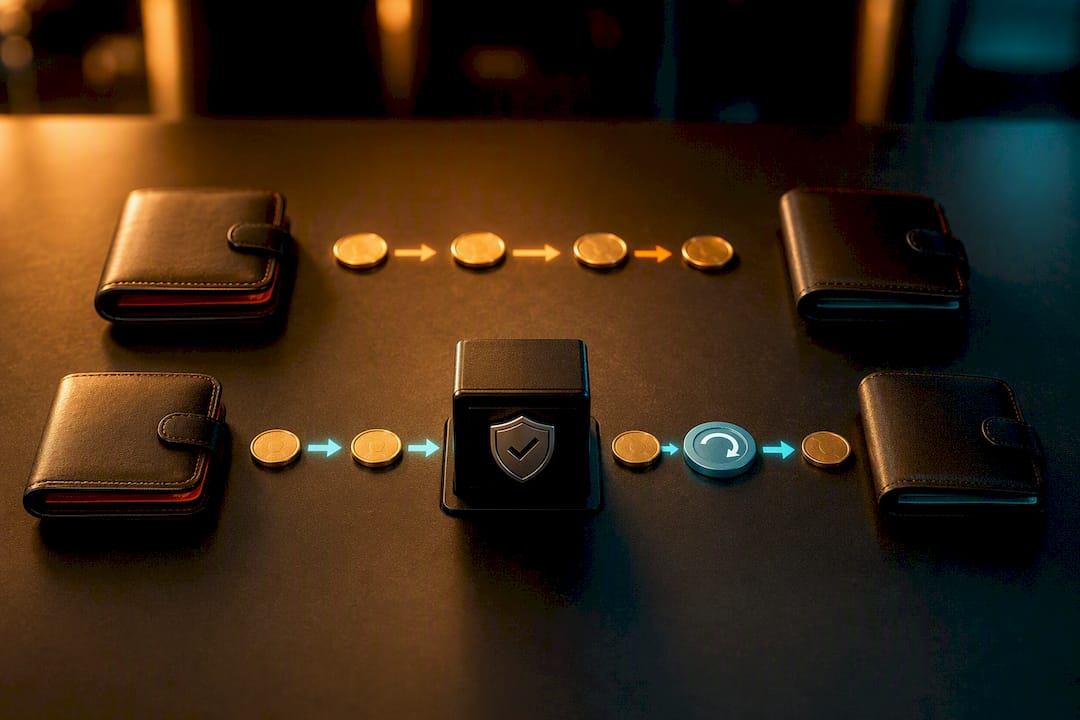
Card payments and ACH transfers through a booking platform add a processing layer, and that layer costs something. Coach platforms that run payments through Stripe typically charge around 2.9% plus $0.30 per card transaction, a fee usually built into the price you see rather than added on top. In exchange, you get a real receipt trail, easier refunds, and often automatic scheduling tied to the payment.
Marketplace and escrow-based checkout goes a step further. Money sits with the platform until the session happens, which protects both sides. Coaches don't have to chase payment, and parents aren't stuck disputing a Venmo request after the fact. Many of these platforms also support guest checkout, so you can book and pay without creating a full account first.
Payout timing to know: New coaches on Stripe-connected platforms often see a delay on their first payout, typically 7 to 10 business days, before switching to a faster rolling schedule. That's a coach-side detail, but it explains why some new coaches ask for payment upfront.
Subscriptions and credit packs show up increasingly often, especially with coaches who run recurring weekly sessions. A credit pack works like a prepaid punch card. It commits the family to showing up, which coaches like, and it usually locks in a lower per-session rate.
What Actually Drives Coaching Prices (and What's Worth Paying For)?
Sticker price tells you almost nothing about value on its own. Two coaches at $70 an hour can deliver wildly different results depending on what's actually happening during that hour.
Credentials and track record matter more than years coached. A coach who played D1 or professionally usually commands a premium, but so does a coach with a documented history of getting athletes recruited or making varsity. Ask for specifics, not just a resume.
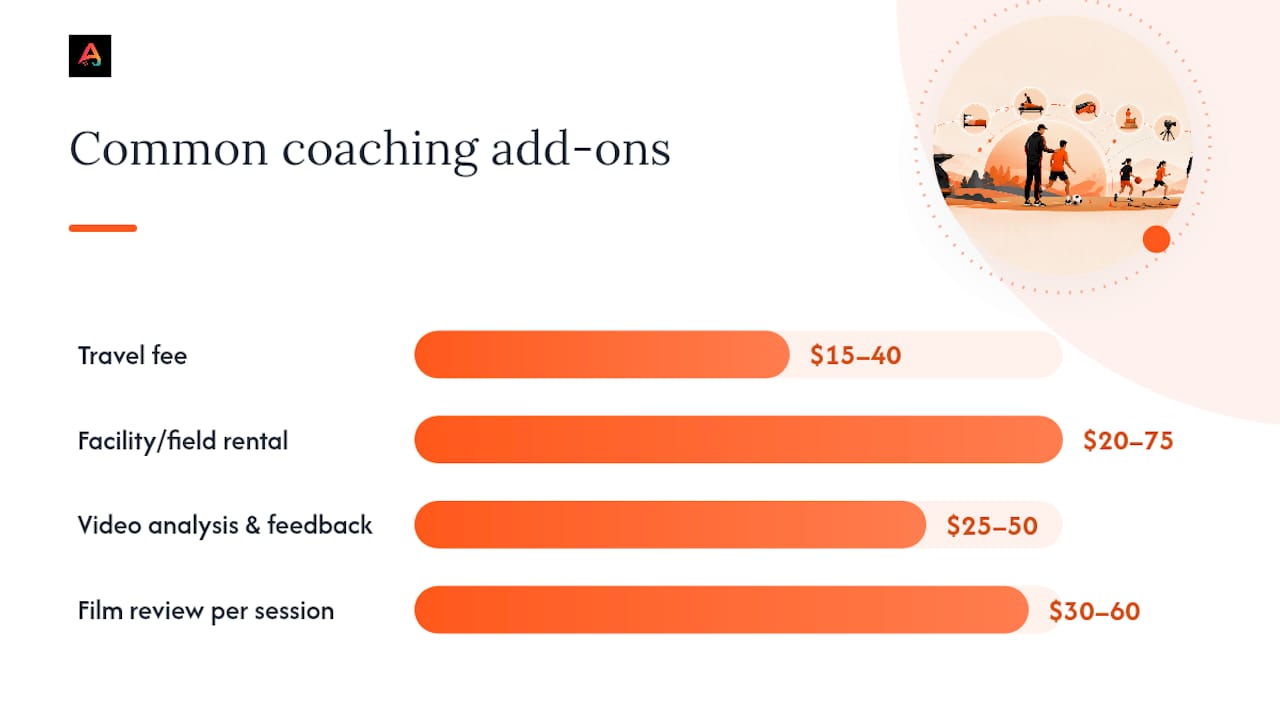
Format changes the math. A private 1:1 session costs more per athlete than a small group of three or four splitting a coach's time, but 1:1 delivers more individual correction. Film review sessions, where a coach breaks down game or practice footage, often get priced separately from on-field time, sometimes $30 to $60 added per session.
Extras add up fast:
- Travel to your location instead of the coach's facility: often $15 to $40 extra
- Facility or field rental fees, when not included: $20 to $75 depending on the venue
- Video analysis and written feedback: frequently a $25 to $50 add-on
- Prep time for specialized position work (like breaking down an opposing defense): sometimes built into a higher base rate
Pro Tip: For a short-term fix, like cleaning up a jump shot before tryouts, price-shop and prioritize availability. For long-term development, like a multi-year pitching program, pay more for a coach with a documented track record. The stakes and time horizon are different, so the buying decision should be too.
How to Compare Coaching Packages and Bundles
Coaches rarely quote a single number. Most offer tiers, and doing quick math on those tiers before you commit saves real money.
A common structure looks like this: a single session runs around $90, three sessions run $270 to $300, and a 10-session package runs $800 to $1,000. That last tier often works out to roughly 11% off the single-session rate, sometimes more depending on the coach.
Before comparing offers side by side, run these checks:
- Divide the package price by the number of sessions to get the true per-session cost, not the advertised price
- Ask whether the cancellation policy changes between single sessions and packages, since some coaches tighten refund terms on bulk purchases
- Confirm whether package sessions expire, and if so, when, since a "10-pack" that expires in 60 days is worth less than one that doesn't expire
- Check if platform processing fees apply per session or once for the whole package
Monthly billing and installment plans make sense for families committing to a season-long program, especially with specialists charging $100+ per hour, since spreading $1,200 across four monthly payments beats one lump sum for most household budgets. For a one-off tune-up before a showcase or tryout, a single session or a small three-pack is the smarter buy. Locking into a 20-session package for something you're not sure you'll continue is how families end up with unused, expired credits sitting on a coach's books.
How Do You Pay a Coach Safely?
A little paperwork upfront prevents almost every payment dispute that comes up later.
- Get session length, cancellation window, and refund policy in writing before the first payment. A simple text or email confirming "60-minute sessions, 24-hour cancellation notice, no refund for no-shows" covers the basics.
- Save every receipt and confirmation. Screenshot Venmo/Zelle transfers, and keep booking confirmations from any platform. If a dispute comes up, documentation is the entire argument.
- Ask how a third-party app stores or shares your payment data before entering a card number, especially for smaller or newer coaching apps. A platform that processes cards should be able to explain, in plain terms, whether it stores your card details or just passes them through a processor like Stripe.
- Confirm liability coverage. A basic waiver, even a short one, protects both the coach and your family if an athlete gets hurt during a session.
Pro Tip: If a coach only accepts cash with no receipt and won't put a cancellation policy in writing, that's not automatically a red flag, but it means you're carrying all the risk. Weigh that against the price before signing up for a long package.
A Real Example: How a Coaching Marketplace Handles Bookings and Payment
Athlo's coaching marketplace is built around exactly the friction points parents run into with cash and direct transfers. Coaches list availability, parents book directly in the app, and payment runs through secure checkout instead of a group chat and a Venmo request.
A few things that show up in how it works:
- Sessions get booked and paid for in one flow, so there's a digital record instead of a scattered thread of payment confirmations
- Guest checkout style flexibility through Stripe-powered payments means parents aren't stuck creating extra accounts just to pay for one session
- Coaches get a structured way to list rates and packages instead of negotiating price over text every time
Athlo's blog covers the coach side of this in more detail, including a practical playbook for getting paid to coach youth sports, useful reading if you're trying to understand how a coach on the other end of the transaction thinks about pricing.
What I'd Actually Tell a Parent Weighing Price
Pay more when the coach brings something measurable: a specialist background, a clear track record, or skills you genuinely can't get from a cheaper option nearby. Shop on price when the goal is general improvement, since a $50 hour from a solid local coach usually beats a $120 hour from someone whose only edge is a bigger name.
A clear cancellation policy matters more than saving ten dollars an hour. Disputes over no-shows and refunds cause more frustration than the rate itself ever does. Before committing to a long package, book one session or a short three-pack first. It's the cheapest way to find out if a coach's style actually fits your athlete, and it costs a lot less than discovering that six weeks into a prepaid program.
— Abdulazeez
Book and Pay for Coaching Without the Group-Chat Chaos
Athlo is the alternative to chasing Venmo requests and group texts to book a coach. Instead of piecing together availability, price, and payment across three different apps, Athlo's coaching marketplace puts finding a coach, booking a session, and paying through secure checkout in one place.

You browse coaches by sport, see their rates upfront, and book a session or package without a back-and-forth negotiation over text. Payments run through secure checkout, so you get a real record of what you paid and when, instead of a scroll-back-through-Venmo situation three weeks later. As a marketplace, Athlo takes a transaction fee on bookings made through the platform, the same way most coach-payment tools do, but the trade is a cleaner process on both ends.
If you're a parent trying to find a coach, or a coach trying to get paid without spreadsheet math, download Athlo on the App Store or Google Play and check out the coaching marketplace to see who's available near you.
Where to Verify Payment Details and Fees
A few places worth bookmarking if you want to double-check fee structures or set up payments yourself:
- Stripe's own fee documentation, referenced by most coach-platform providers, for the actual processing rates behind card and ACH transactions
- CoachIQ's payment setup docs for a look at how credit packs, subscriptions, and one-time payments get configured on the coaching side
- Athlo's blog for parents and coaches, including its guide on organizing paid pickup games, for context on how group payment structures work outside of 1:1 coaching
Sources
- Private Sports Coaching Costs 2026: Football, Soccer & Basketball Pricing
- Payments & Billing for Sports Coaches | CoachIQ
- Setting up payment options | CoachIQ docs
FAQ
How much should you charge for private coaching?
Rates typically run $30 to $50 an hour for entry-level coaches, $60 to $120 for experienced coaches, and $100 or more for specialists and former pros, with regional and sport-specific variation on top of that.
What is the 70/30 rule in coaching?
Definitions vary by context, and there's no single standard financial or coaching framework tied to a "70/30 rule" that applies broadly to private sports coaching pricing or session structure.
Do you need an LLC to be a private coach?
Not necessarily. Many independent coaches operate as sole proprietors without an LLC, though forming one can offer liability protection, and requirements vary by state, so checking with a local accountant or attorney is worth doing before assuming either way.
What is the 80/20 rule in coaching?
There's no single agreed-upon "80/20 rule" specific to private sports coaching pricing or session planning, so treat any version you hear as informal guidance rather than an industry standard.
Is it safer to pay a coach through an app than in cash?
Generally yes, since card or platform payments through services like Athlo's coaching marketplace create a receipt trail and support easier refunds, while cash and direct transfers offer no formal dispute process if a session gets canceled.